
IIT Kharagpur Research Unlocks Moon’s Secrets Ahead of Chandrayaan-4
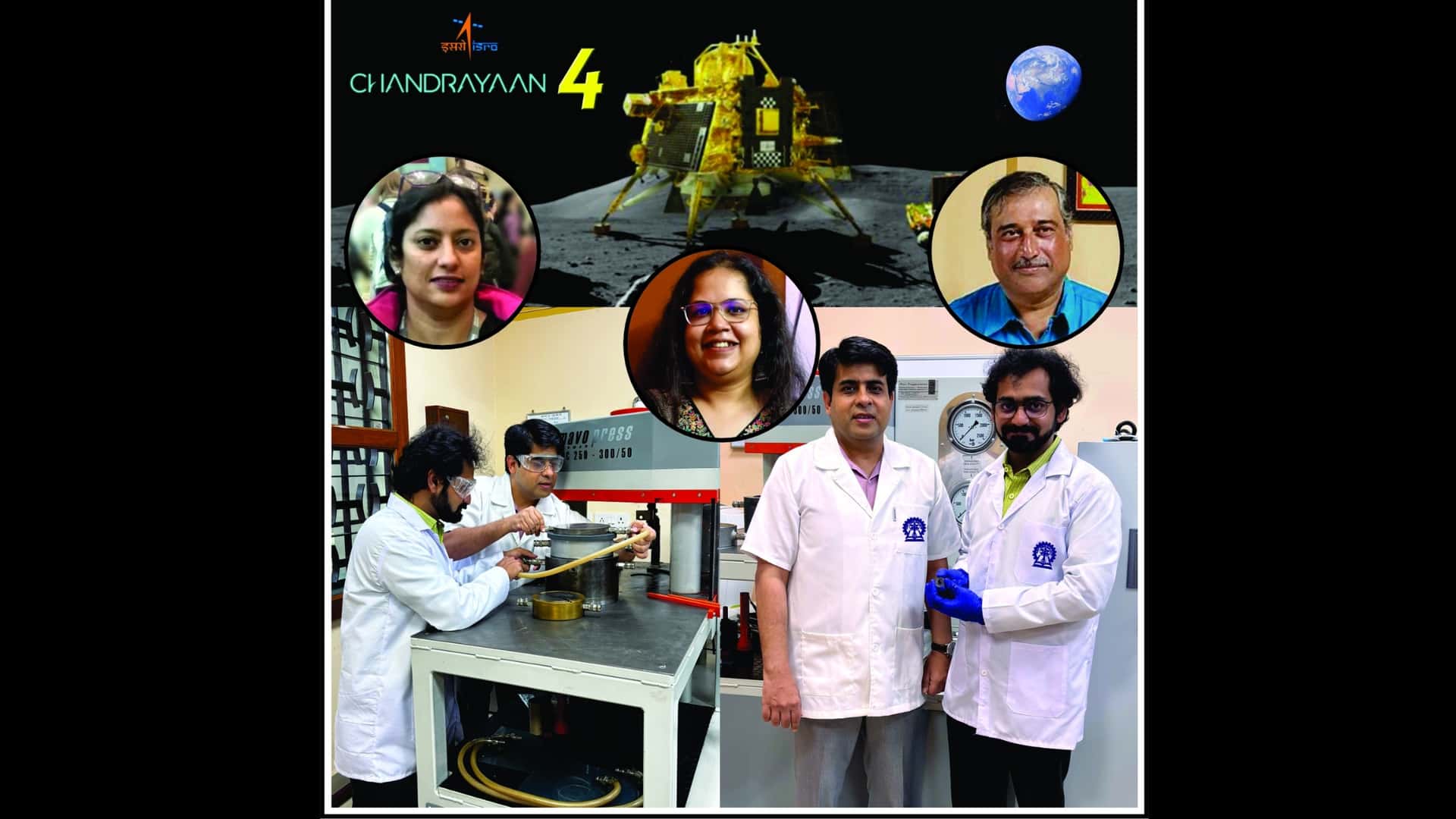
New Delhi, March 25, 2026: In a major boost to India’s lunar exploration ambitions, researchers from Indian Institute of Technology Kharagpur have uncovered crucial insights into the Moon’s interior evolution, offering valuable scientific inputs for upcoming missions such as Chandrayaan-4.
The study, published in the reputed journal Geochimica et Cosmochimica Acta and highlighted by The Hindu, focuses on understanding the formation and behavior of titanium-rich magmas beneath the lunar surface.
The research team—comprising Himela Moitra, Prof. Sujoy Ghosh, Tamalkanti Mukherjee, Prof. Saibal Gupta, and Prof. Kuljeet Kaur Marhas—conducted advanced high-pressure and high-temperature laboratory experiments. These simulations recreated the extreme conditions deep within the Moon, particularly examining iron- and titanium-rich rocks known as ilmenite-bearing cumulates.
Their findings suggest that these dense materials, formed during the Moon’s early molten phase, undergo partial melting processes that produce titanium-rich magmas. These magmas closely resemble those found in lunar samples and detected through spacecraft observations.
The study also sheds light on how interactions within the Moon’s mantle affect magma density, formation, and movement toward the surface—providing a clearer picture of lunar volcanic activity. Such insights are expected to play a key role in interpreting orbital data and refining strategies for future sample-return missions.
Scientists believe this research will significantly enhance mission planning by enabling more precise identification of sampling sites, ultimately improving the scientific yield of India’s upcoming lunar explorations.
Beyond its immediate application to space missions, the breakthrough highlights India’s growing expertise in experimental petrology and planetary sciences. It also reinforces IIT Kharagpur’s position as a leading hub for cutting-edge research in the field.
As the institute marks its 75th year, this achievement underscores its continued contribution to advancing both national and global scientific frontiers.